
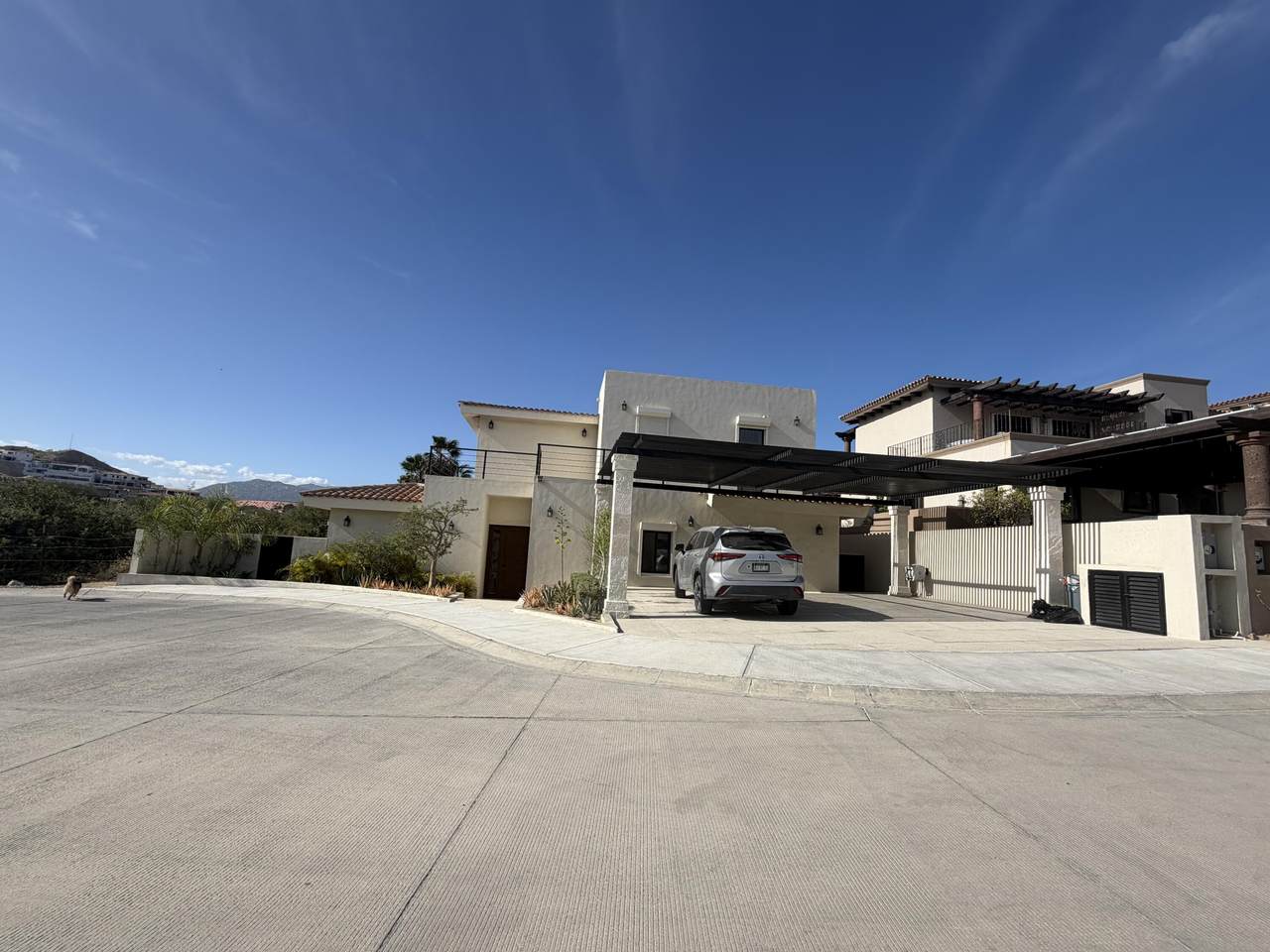
Club Campestre sits between the Sea of Cortez and the desert foothills outside San José del Cabo, and that setting shapes how homes here are built. Sun exposure, salt air, and seasonal heat are practical design problems, not marketing themes, and buyers evaluating a property benefit from understanding how a home addresses them. This guide covers the design considerations worth asking about when looking at a home in Club Campestre or elsewhere in Los Cabos – not a claim that any specific property includes every feature described below.
Orientation, Shade, and Siting
Where a home sits on its lot, and which way its main rooms face, affects comfort year-round. Homes oriented to capture prevailing breezes and shade the hottest west-facing walls in the afternoon tend to stay cooler without relying entirely on air conditioning. Deep roof overhangs, covered terraces, and shaded walkways are common responses to the region’s strong sun. When touring a property, it is reasonable to ask how the home is oriented relative to the sun’s path and prevailing wind, and to look at how much of the exterior living space actually stays shaded through the day.
Indoor-Outdoor Living
Large sliding or folding doors, covered terraces, and outdoor kitchens or dining areas are common in this climate, where much of the year invites living outside. The transition between indoor and outdoor space affects both daily comfort and how a home functions for entertaining or simply relaxing. Ask how the outdoor spaces are protected from midday sun and evening insects, and whether the transition areas hold up to sand, salt air, and heavy use.
Materials Built for Sun, Salt, and Heat
Coastal desert conditions are hard on building materials. Salt air accelerates corrosion in untreated metal fixtures, intense UV exposure fades and degrades some finishes faster than in milder climates, and heat-absorbing surfaces can make outdoor areas uncomfortable underfoot. Stone, concrete, and other thermal-mass materials are often used because they moderate indoor temperature swings between hot days and cooler nights. When evaluating a home, ask what materials were used for exterior finishes, railings, and outdoor flooring, and whether they were selected with this climate in mind.
Water-Conscious Landscaping
Water is a genuine consideration in this part of Baja California Sur, and landscaping choices affect both a property’s upkeep and its water use. Native and low-water plantings, efficient irrigation, and permeable hardscaping reduce a property’s water demands compared to a lawn-heavy landscape imported from a wetter climate. Buyers can reasonably ask about the irrigation system in place, the water source, and typical monthly water costs for the property.
Solar and Energy Considerations
Los Cabos gets a great deal of consistent sunshine, which makes solar panels a practical option for some homeowners, though installation, permitting, and system size vary by property and should be evaluated individually rather than assumed. If a home is described as having solar power, ask about the system’s age, capacity, and any warranty or maintenance history, since this affects both performance and resale considerations.
Natural Ventilation
Well-placed windows, breezeways, and higher ceilings can move air through a home and reduce how much it depends on air conditioning. Cross-ventilation is most effective when window and door placement takes prevailing wind direction into account rather than being purely aesthetic. This is worth observing in person, ideally on a warm afternoon, rather than assuming from a floor plan alone.
Questions to Ask When Evaluating a Home’s Design
A few practical questions can help separate genuine climate-conscious design from surface-level styling: How is the home oriented, and how much shade do the outdoor spaces get through the day? What materials were used on exterior surfaces exposed to sun and salt air? Is there a solar system, and if so, what is its age and capacity? What does the landscaping require in terms of water and maintenance? None of these questions have a universally right answer – they depend on the specific property and a buyer’s own priorities – but asking them leads to a more informed purchase than relying on general descriptions alone.
For a broader look at daily life and amenities in the community, see the Amenities & Lifestyle guide. To see what is currently listed, visit the Homes For Sale page, or explore the individual neighborhoods that make up Club Campestre on the Communities page.
